Why cement tiles are wrong for outdoor garden paths (and what to use instead in 2026)
Decorative cement tiles can be beautiful indoors, but they are usually the wrong default choice for an exposed garden path in the British climate. Unless the exact tile is explicitly approved by its manufacturer for exterior floors, a path asks more of the material than an indoor hallway or kitchen
Decorative cement tiles can be beautiful indoors, but they are usually the wrong default choice for an exposed garden path in the British climate. Unless the exact tile is explicitly approved by its manufacturer for exterior floors, a path asks more of the material than an indoor hallway or kitchen ever will: repeated rain, standing moisture, winter frost, soil, leaf tannins, grit and constant wet-dry cycles.
That does not mean every cement tile will fail outdoors. It means the specification must be treated as a technical decision rather than a styling shortcut. For most paths, a purpose-made exterior porcelain paving tile or suitable natural stone paving gives you a more dependable starting point, with fewer maintenance compromises.
Key takeaways
| Garden-path question | Why it matters | Better approach |
|---|---|---|
| Is the cement tile approved for exterior floors? | Indoor suitability does not confirm frost, slip or weather performance. | Use only products whose manufacturer explicitly approves the application. |
| How much water can the material absorb? | Moisture in a porous tile or bedding layer can contribute to staining and freeze-thaw stress. | Choose low-absorption exterior porcelain or a suitable outdoor stone. |
| Will the surface be safe when wet? | Paths collect rain, shade, algae and garden debris. | Specify an exterior texture and confirm the relevant slip-performance information. |
| Can the installation drain correctly? | Even a good paving product can fail over an unsuitable base or poorly formed falls. | Plan the sub-base, full bedding, falls, joints and drainage as one system. |
| How much maintenance is acceptable? | Cement finishes may need careful sealing and periodic maintenance. | Choose a material whose care requirements suit the way the path will be used. |
Short answer: if a decorative cement tile is not expressly rated for your proposed outdoor installation, do not assume that sealing will turn it into garden paving. Start with a product designed for exterior use.
Why outdoor paths are hard on decorative cement tiles
A garden path is rarely dry and evenly sheltered. One section may sit in full sun while another remains shaded by planting. Water can collect at edges, leaves can hold moisture against the surface, and soil is carried across the paving on shoes. In winter, absorbed water may freeze and expand; over time, repeated cycles can stress porous materials and any voids within the bedding system.
Decorative cement tiles are valued for their depth of colour and handcrafted character, but their cementitious body is more porous than vitrified porcelain. They normally depend on the correct sealing regime and careful cleaning. Outdoors, that maintenance burden increases because the surface is exposed continuously rather than occasionally.
The important distinction is not “cement is bad” and “porcelain is good”. It is whether the exact product, finish and installation system are designed for an exposed UK path.
Sealer is not a substitute for an exterior specification
A suitable sealer can help to reduce staining and moisture uptake, but it does not change the basic construction of a tile or correct an unsuitable substrate. Sealers also need to be applied and maintained in accordance with their technical instructions. Wear, weather and cleaning can all affect their performance.
If you are considering cement tiles outdoors, ask for written confirmation covering the tile’s exterior-floor suitability, frost resistance, recommended sealer, slip performance and installation method. If those answers are unclear, a purpose-made paving product is the safer route.
Why exterior porcelain paving is often the practical alternative
Porcelain stoneware is manufactured to create a dense body with low water absorption and strong mechanical performance. These characteristics are well established in materials research and help explain why purpose-made porcelain paving is widely specified outdoors. The crucial phrase is still purpose-made: use an exterior paving product and follow its technical data rather than assuming that any indoor porcelain tile will do the same job.
For a garden path, exterior porcelain can offer consistent dimensions, a wide choice of stone- and concrete-inspired designs, and textured finishes intended for outdoor conditions. It can be especially useful where you want a controlled contemporary layout or a material that coordinates with an adjoining patio.
For further technical background, see Romero and Pérez’s peer-reviewed review of the microstructure and properties of porcelain stoneware.
Three Ca’pietra outdoor paving directions to consider
The right choice depends on the garden, the property and how much visual movement you want. These three Ca’pietra exterior porcelain options illustrate very different design directions while remaining grounded in outdoor suitability.
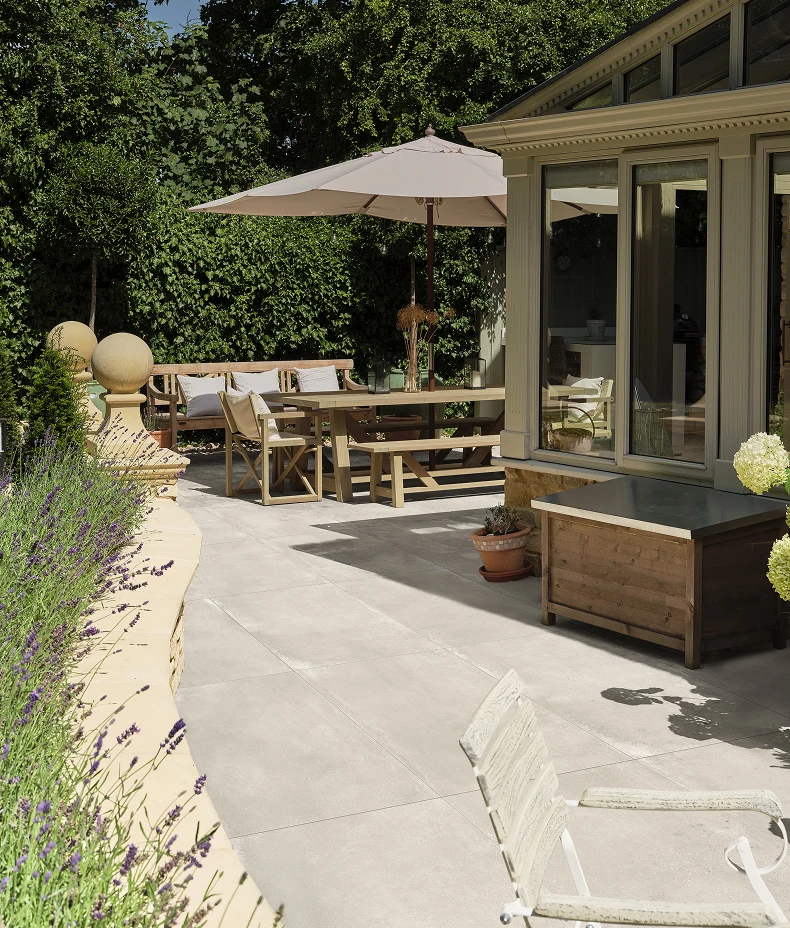
1. Béton Chic Porcelain Paving Textured
Béton Chic Porcelain Paving Textured is a versatile neutral choice for paths that connect a terrace, dining area or modern extension. Its quiet concrete-inspired surface allows planting and architecture to take the lead, while the paving format creates a clean, ordered route through the garden.
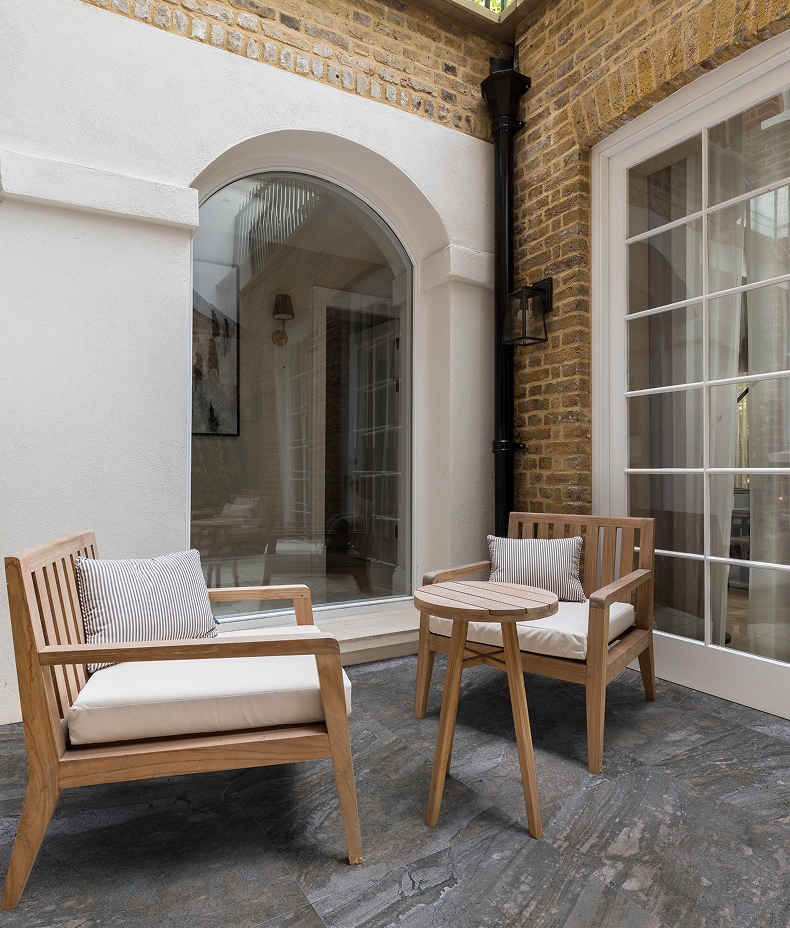
2. Lithos Porcelain Paving Textured Earth
Lithos Porcelain Paving Textured Earth brings greater stone-like movement and a warmer, more varied character. It suits schemes where a plain grey paver would feel too uniform, particularly beside brick, timber or naturalistic planting.
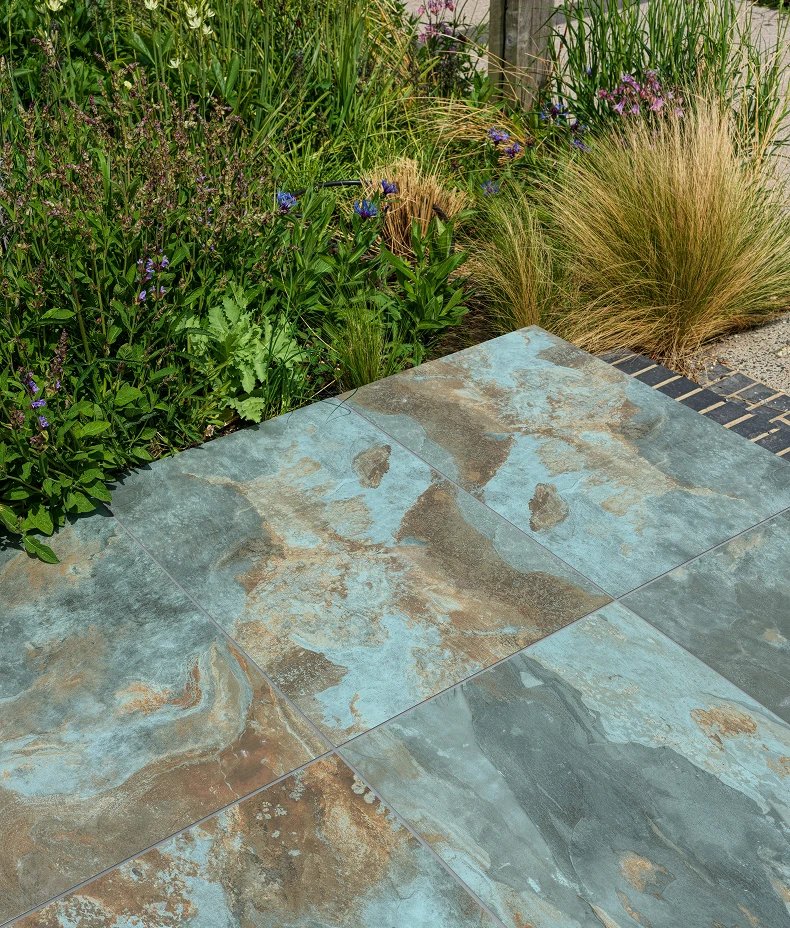
3. Komodo Porcelain Paving Textured Green
Komodo Porcelain Paving Textured Green is the expressive option. Its blue-green and earthy variation can turn a simple path into a deliberate garden feature, particularly when it is framed by grasses, ferns and deep green foliage.
You can compare more materials, colours and formats in our Ca’pietra exterior paving collection.
Suitable natural stone can also work beautifully
Porcelain is not the only alternative. Natural stone paving can be an excellent choice when you want genuine tonal variation, softened edges and a surface that develops character with the garden. The important point is to choose a stone and finish offered for exterior use, then understand how it should be installed, sealed and maintained.
Stone varies naturally, so samples and current batch photographs are particularly useful. Ask how the finish behaves when wet, what colour variation to expect, and whether the stone needs sealing before or after installation. A knowledgeable installer should also advise on drainage, bedding and jointing for the particular stone.
The installation matters as much as the paving
Material choice cannot compensate for poor groundwork. A long-lasting path depends on a stable, correctly prepared base and an installation method suited to the paving. Water should be directed away from buildings and should not be allowed to sit beneath or across the finished surface.
Before work starts, agree the following with your installer:
- Sub-base and bedding: appropriate preparation for the ground conditions, anticipated use and selected paving.
- Falls and drainage: a clear route for surface water, coordinated with thresholds, planting beds and existing drainage.
- Full support: the paving should be installed using the product manufacturer’s recommended system, avoiding unsupported voids.
- Joints and movement: joint width, movement provision and perimeter details should be planned rather than improvised.
- Compatible products: use exterior-grade adhesives, primers, grouts, jointing compounds and sealers where the specification calls for them.
- Wet-use performance: confirm the chosen finish is appropriate for the path’s gradient, exposure and users.
Always follow the current instructions from the paving, adhesive and jointing manufacturers. Site conditions vary, so obtain project-specific advice from a competent installer.
Plan the path layout before ordering
Paths often involve more cutting than open patios. Bends, steps, drain covers, borders and narrow widths can all affect the set-out. A simple running bond may use material more efficiently than a diagonal or herringbone design, but the best solution depends on the format and the dimensions of the route.
Draw the path to scale and agree where cuts will fall before ordering. Your installer can then calculate an appropriate allowance for cuts, breakages and future repairs. Avoid relying on a universal wastage percentage: a straight path using a modular format is very different from a winding route with multiple junctions.
Order samples and check them outdoors
Colour and texture change with natural light, shade and rain. A warm beige can appear cooler on a north-facing path; a subtle texture can become much more visible in low evening light. View samples where the paving will actually be laid, both dry and damp, before committing to the full quantity.
Shaw Stone Tile Studio offers free cut samples across much of the Ca’pietra collection. Samples help with colour and texture selection, but they do not replace the manufacturer’s technical data or a full-size wet-slip assessment.
How to maintain an outdoor path
Whichever material you choose, regular light maintenance is better than occasional aggressive cleaning. Sweep away leaves and soil, keep nearby drainage clear, and use cleaning products approved for the paving. Avoid assuming that a pressure washer or strong acid cleaner is safe: excessive pressure can damage joints, while unsuitable chemicals may mark stone, grout or sealed surfaces.
Inspect shaded areas periodically for algae and deal with the cause as well as the appearance. If a sealer is specified, follow the manufacturer’s guidance on preparation and reapplication.
So, are cement tiles ever right outside?
They can be appropriate in some sheltered exterior settings when the specific product is approved, the climate and exposure are suitable, and the complete installation and maintenance system is followed. The mistake is choosing an indoor decorative cement tile for an exposed garden path solely because the pattern looks right.
For most UK paths in 2026, purpose-made exterior porcelain paving or suitable natural stone is the clearer, lower-risk specification. You can still create colour, pattern and character; you are simply starting with a material designed for the job.
If you would like help narrowing the options, browse our outdoor paving collection, order samples, or ask the Shaw Stone Tile Studio team about your path dimensions, aspect and preferred style.
Frequently asked questions
Can cement tiles be used outside on a garden path?
Only when the exact product is approved by its manufacturer for the proposed exterior floor application. The tile, sealer, bedding, joints, drainage and exposure all matter. If the technical information does not clearly confirm suitability, choose purpose-made exterior paving instead.
Why can frost be a problem for porous paving?
Water held within a porous material, crack or bedding void can freeze and expand. Repeated freeze-thaw cycles may contribute to cracking, lifting or surface deterioration. Good drainage and a correctly specified installation are therefore essential.
Is porcelain paving better than cement tile outdoors?
Purpose-made exterior porcelain is often the more practical option because its dense body has low water absorption and outdoor ranges offer textured finishes. Check the technical data for the specific product rather than relying on material name alone.
What is the best paving for a shaded garden path?
Look for an exterior product with suitable wet-use performance and plan for drainage and routine algae control. Textured porcelain and suitable natural stones can both work, but the best choice depends on the gradient, planting, exposure and maintenance expectations.
How much extra paving should I order?
Ask your installer to calculate the allowance from the actual layout, format and cutting plan. Straight paths may need less additional material than diagonal patterns, tight curves or routes with many junctions. Retaining a small quantity from the same batch for future repairs is often sensible.
Should I order outdoor paving samples?
Yes. View samples in the intended location, in sun and shade and, where appropriate, both dry and damp. Use them to judge colour and texture, then confirm technical suitability from the manufacturer’s current data.